Government of Mali
161 officials listed, each linked to its source.
Mali, officially the Republic of Mali, has its capital at Bamako and a population of 25,198,821 (World Bank, 2025). The CIA World Factbook describes its system of government as a semi-presidential republic. Président de la Transition, Chef de l'Etat Assimi Goïta (in office since 7 Jun 2021) is head of state; Premier ministre Abdoulaye Maïga is head of government. The legislature is the Transitional National Council (Conseil national de transition), a unicameral body with 147 seats, whose members are appointed rather than elected. The most recent national election, per IFES ElectionGuide, was held on 19 Apr 2020. The source lists the next national election as expected in December 2030. Elections are run by the Autorité Indépendante de Gestion des Élections (AIGE). The directory below lists 1 cabinet and ministerial posts with their current holders and sources.
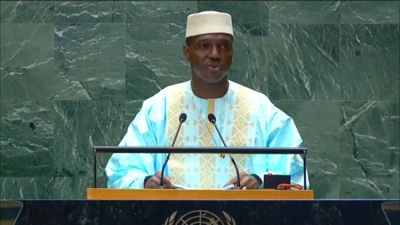
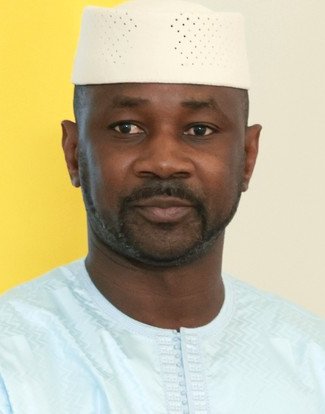
Assimi Goïta
Since 7 Jun 2021 · Source: sgg-mali.ml
Transitional National Council (Conseil national de transition)
Unicameral. Source: Décret n° 2020-0239/PT-RM
Members are appointed, not elected. The council is the transitional legislature that replaced the National Assembly after the August 2020 coup. Its 121 original members were named by Decree No. 2020-0239 of 3 December 2020, and the transitional president added 26 more on 28 October 2022, bringing the chamber to 147 seats. Membership changes through deaths and resignations and no current roll of sitting members is published, so no member pages are built for Mali. The 2020 transition charter was revised in July 2025 to give the head of state a five-year renewable mandate, and political parties were dissolved in 2025, leaving no national election scheduled before 2030.
Status checked 19 Oct 2026
| Chamber | Seats | Date appointed |
|---|---|---|
| Transitional National Council (Conseil national de transition) | 147 (all appointed) | 3 Dec 2020 |
Mali National Transition Council: list of members
Seats by party
The National Transitional Council is an appointed transitional chamber, not an elected one, and it publishes no current roll of sitting members; its 121 original members were named by Decree No. 2020-0239 of 3 December 2020 and 26 were added in October 2022. Checked on 19 October 2026.
Cabinet
| Portfolio | Holder | Since |
|---|---|---|
| Minister of Defence | Assimi Goïta | - |
Sources: Journal officiel de la Republique du Mali (retrieved 23 Oct 2026).
Other cabinet members
| Portfolio | Holder | Appointed |
|---|---|---|
| Prime Minister (Premier ministre) | Général de Division Abdoulaye Maïga | 21 Nov 2024 |
| Minister of State for Economy and Finance (Ministre d'État, Ministre de l'Économie et des Finances) | Alousséni Sanou | 12 Feb 2026 |
| Minister of State for Reconciliation, Peace and National Cohesion (Ministre d'État, Ministre de la Réconciliation, de la Paix et de la Cohésion nationale) | Général de Corps d'Armée Ismaël Wagué | 12 Feb 2026 |
| Minister of Justice and Human Rights, Keeper of the Seals (Ministre de la Justice et des Droits de l'Homme, Garde des Sceaux) | Mamoudou Kassogué | 12 Feb 2026 |
| Minister of Territorial Administration and Decentralisation (Ministre de l'Administration territoriale et de la Décentralisation) | Général de Brigade Issa Ousmane Coulibaly | 12 Feb 2026 |
| Minister for State Refoundation, in charge of Relations with Institutions (Ministre de la Refondation de l'État, chargé des Relations avec les Institutions) | Yaya Gologo | 12 Feb 2026 |
| Minister of Security and Civil Protection (Ministre de la Sécurité et de la Protection civile) | Général de Division Daoud Aly Mohammedine | 12 Feb 2026 |
| Minister of Transport and Infrastructure (Ministre des Transports et des Infrastructures) | Dembélé Madina Sissoko | 12 Feb 2026 |
| Minister of Foreign Affairs and International Cooperation (Ministre des Affaires étrangères et de la Coopération internationale) | Abdoulaye Diop | 12 Feb 2026 |
| Minister of National Education (Ministre de l'Éducation nationale) | Amadou Sy Savané | 12 Feb 2026 |
| Minister of Higher Education and Scientific Research (Ministre de l'Enseignement Supérieur et de la Recherche Scientifique) | Bouréma Kansaye | 12 Feb 2026 |
| Minister of Mines (Ministre des Mines) | Amadou Keïta | 12 Feb 2026 |
| Minister of Energy and Water (Ministre de l'Énergie et de l'Eau) | Tiémoko Traoré | 12 Feb 2026 |
| Minister of Health and Social Development (Ministre de la Santé et du Développement social) | Colonel-major Assa Badiallo Touré | 12 Feb 2026 |
| Minister of Labour, Civil Service and Social Dialogue (Ministre du Travail, de la Fonction publique et du Dialogue social) | Fassoun Coulibaly | 12 Feb 2026 |
| Minister of Youth and Sports, in charge of Civic Instruction and Citizenship Building (Ministre de la Jeunesse et des Sports, chargé de l'Instruction civique et de la Construction citoyenne) | Abdoul Kassim Ibrahim Fomba | 12 Feb 2026 |
| Minister for Malians Abroad and African Integration (Ministre des Maliens établis à l'Extérieur et de l'Intégration africaine) | Mossa Ag Attaher | 12 Feb 2026 |
| Minister of Agriculture (Ministre de l'Agriculture) | Ibrahima Samaké | 12 Feb 2026 |
| Minister of National Entrepreneurship, Employment and Vocational Training (Ministre de l'Entrepreneuriat national, de l'Emploi et de la Formation professionnelle) | Oumou Sall Seck | 12 Feb 2026 |
| Minister for the Promotion of Women, Children and the Family (Ministre de la Promotion de la Femme, de l'Enfant et de la Famille) | Diarra Djénéba Sanogo | 12 Feb 2026 |
| Minister of Industry and Commerce (Ministre de l'Industrie et du Commerce) | Moussa Alassane Diallo | 12 Feb 2026 |
| Minister of Urban Planning, Housing, State Lands, Territorial Planning and Population (Ministre de l'Urbanisme, de l'Habitat, des Domaines, de l'Aménagement du Territoire et de la Population) | Imirane Abdoulaye Touré | 12 Feb 2026 |
| Minister of Environment, Sanitation and Sustainable Development (Ministre de l'Environnement, de l'Assainissement et du Développement durable) | Doumbia Mariam Tangara | 12 Feb 2026 |
| Minister of Communication, Digital Economy and Administrative Modernisation (Ministre de la Communication, de l'Économie numérique et de la Modernisation de l'Administration) | Alhamdou Ag Ilyène | 12 Feb 2026 |
| Minister of Crafts, Culture, Hotel Industry and Tourism (Ministre de l'Artisanat, de la Culture, de l'Industrie hôtelière et du Tourisme) | Mamou Daffé | 12 Feb 2026 |
| Minister of Religious Affairs, Worship and Customs (Ministre des Affaires religieuses, du Culte et des Coutumes) | Mahamadou Koné | 12 Feb 2026 |
| Minister of Livestock and Fisheries (Ministre de l'Élevage et de la Pêche) | Youba Ba | 12 Feb 2026 |
| Minister Delegate to the Prime Minister, in charge of Political Reforms and Support to the Electoral Process (Ministre délégué auprès du Premier ministre, chargé des Réformes politiques et du Soutien au Processus électoral) | Mamani Nassiré | 12 Feb 2026 |
Sources: Journal officiel de la République du Mali (Secrétariat Général du Gouvernement) (retrieved 11 Oct 2026).
List as of 11 Oct 2026.
Parliament, courts and independent offices
| Office | Holder | Since |
|---|---|---|
| Central Bank Governor | Jean-Claude Kassi BROU | - |
| Speaker of the National Transitional Council | Malick Diaw | - |
Sources: Banque Centrale des Etats de l'Afrique de l'Ouest (BCEAO) (retrieved 23 Oct 2026); Wikipedia, fr.wikipedia.org/w/index.php?oldid=238337130 (retrieved 23 Oct 2026).
Mali election dates 2026, 2027 and 2028
Next national election: Due by 2030, presidential election.
| Date | Election | Status | Turnout | Winner |
|---|---|---|---|---|
| Due by 2030 | Presidential election | Due | - | - |
Sources: CIA World Factbook, World Leaders (retrieved 19 Oct 2026).
Economy at a glance
Full economy page- GDP
- US$30bn
- 2025
- GDP growth
- 5.6%
- 2025
- Remittances received
- US$1.1bn
- 2024
- Foreign direct investment
- US$844m
- 2025
Need data we do not publish?
Tell us the question and the country. We design and field the study, and publish the method with the result.
Commission a study in MaliMore data for Mali
- Election calendar and results
- Economy of Mali
- Development jobs in Mali
- Constitution of Mali
- Statistics office and surveys in Mali
- Exams and universities in Mali
- Research permits and data protection in Mali
- Paid polls in Mali: join the waiting list
- Inflation and unemployment in Mali
- Debt of Mali: debt to GDP and largest creditors
- Natural resources in Mali
- Mali and the rest of West Africa
Population of Mali
Mali had 25.2 million people in 2025, 19th largest of 53 in Africa. The IMF projects 29.3 million by 2030. African countries by population.
Population (2025)
25.2
19th largest of 53 in Africa
Population growth since 2015 (2025)
35.7 %
5th fastest-growing of 52 in Africa
Projected population 2030 (2030)
29.3
19th highest of 52 in Africa
People per sq km (2025)
21
43rd most crowded of 53 in Africa
Source: International Monetary Fund, World Economic Outlook database, October 2026 (DataMapper indicators NGDPDPC, NGDPD and LP), October 2026. Last checked 24 October 2026.
View the data as a table
| Period | Mali |
|---|---|
| 2015 | 18.6 |
| 2016 | 19.2 |
| 2017 | 19.8 |
| 2018 | 20.4 |
| 2019 | 21.1 |
| 2020 | 21.7 |
| 2021 | 22.4 |
| 2022 | 23.1 |
| 2023 | 23.8 |
| 2024 | 24.5 |
| 2025 | 25.2 |
| 2026 | 26.0 (partial) |
| 2027 | 26.8 (partial) |
| 2028 | 27.6 (partial) |
| 2029 | 28.5 (partial) |
| 2030 | 29.3 (partial) |
Source: International Monetary Fund, World Economic Outlook database, October 2026 (DataMapper indicators NGDPDPC, NGDPD and LP), October 2026. Last checked 24 October 2026.
Inflation and unemployment in Mali
Prices in Mali rose 3.3% in 2025, 28th highest of 52 in Africa. The ILO estimates unemployment at 2.8% (2025) and 3.9% among people aged 15 to 24. Mali's own survey put it at 4.5% in 2024. Inflation in Africa · Unemployment in Africa · Mali's economy.
Inflation (2025)
3.3 %
25th lowest of 52 in Africa
Unemployment (2025)
2.8 %
11th lowest of 53 in Africa
Youth unemployment (2025)
3.9 %
11th lowest of 53 in Africa
Unemployment, national survey (2024)
4.5 %
National survey
Source: World Bank, World Development Indicators. Last checked 24 October 2026.
View the data as a table
| Period | Mali |
|---|---|
| 2010 | 1.1 |
| 2011 | 3.0 |
| 2012 | 5.3 |
| 2013 | -0.6 |
| 2014 | 0.9 |
| 2015 | 1.5 |
| 2016 | -1.8 |
| 2017 | 1.8 |
| 2018 | 0.3 |
| 2019 | -1.7 |
| 2020 | 0.4 |
| 2021 | 3.9 |
| 2022 | 9.6 |
| 2023 | 2.1 |
| 2024 | 3.2 |
| 2025 | 3.3 |
| 2026 | Not published |
Source: World Bank, World Development Indicators. Last checked 24 October 2026.
View the data as a table
| Period | ILO modelled estimate | National survey |
|---|---|---|
| 2010 | 1.4 | 8.1 |
| 2011 | 1.4 | 6.9 |
| 2012 | 1.5 | Not published |
| 2013 | 1.5 | 6.4 |
| 2014 | 1.5 | 6.4 |
| 2015 | 1.4 | 7.7 |
| 2016 | 1.4 | 1.4 |
| 2017 | 1.5 | 7.4 |
| 2018 | 1.6 | 1.6 |
| 2019 | 3.3 | 3.2 |
| 2020 | 3.5 | 3.5 |
| 2021 | 4.0 | Not published |
| 2022 | 2.4 | 5.4 |
| 2023 | 3.0 | 5.4 |
| 2024 | 2.9 | 4.5 |
| 2025 | 2.8 | Not published |
| 2026 | Not published | Not published |
Source: World Bank, World Development Indicators. Last checked 24 October 2026.
Life expectancy and infant mortality in Mali
A child born in Mali can expect to live 60.7 years (2024). 73 of every 1,000 children die before age five. Life expectancy in Africa, all countries ranked.
Life expectancy (2024)
60.7
48th longest of 54 in Africa
Child deaths under five (2024)
73
42nd lowest of 54 in Africa
Health spending per person (2023)
34
46th highest of 54 in Africa
Source: World Bank, World Development Indicators. Last checked 24 October 2026.
View the data as a table
| Period | Mali | Middle African country |
|---|---|---|
| 2014 | 57.5 | 61.8 |
| 2015 | 57.9 | 62.3 |
| 2016 | 58.3 | 62.8 |
| 2017 | 58.6 | 63.1 |
| 2018 | 58.9 | 63.2 |
| 2019 | 59.2 | 63.3 |
| 2020 | 58.9 | 63.7 |
| 2021 | 59.1 | 62.5 |
| 2022 | 60.0 | 64.6 |
| 2023 | 60.4 | 65.6 |
| 2024 | 60.7 | 65.8 |
Source: World Bank, World Development Indicators. Last checked 24 October 2026.
View the data as a table
| Period | Mali |
|---|---|
| 2014 | 114 |
| 2015 | 110 |
| 2016 | 105 |
| 2017 | 101 |
| 2018 | 96 |
| 2019 | 92 |
| 2020 | 88 |
| 2021 | 84 |
| 2022 | 80 |
| 2023 | 76 |
| 2024 | 73 |
Source: World Bank, World Development Indicators. Last checked 24 October 2026.
Literacy rate in Mali
35.6% of adults in Mali can read and write (2024, World Bank). Literacy rate in Africa by country · Universities and exam bodies in Mali.
Adult literacy (2024)
35.6 %
49th highest of 52 in Africa
Youth literacy (2024)
50.3 %
51st highest of 53 in Africa
Education spending, % of GDP (2023)
4.2 %
19th highest of 52 in Africa
Source: World Bank, World Development Indicators. Last checked 24 October 2026.
Human development and internet access in Mali
Mali's Human Development Index was 0.419 in 2023, 188th of 193 countries in the world (low human development). Human Development Index in Africa · Tech and internet in Africa · Learn digital skills with SR Academy.
Human Development Index (2023)
0.42
50th highest of 54 in Africa
Internet users (2024)
36.8 %
29th highest of 54 in Africa
Mobile subscriptions (2022)
112
21st highest of 54 in Africa
Access to electricity (2024)
49.5 %
41st highest of 54 in Africa
Source: World Bank, World Development Indicators. Last checked 24 October 2026.
View the data as a table
| Period | Mali | Middle African country |
|---|---|---|
| 2000 | 0.32 | 0.44 |
| 2001 | 0.33 | 0.45 |
| 2002 | 0.34 | 0.45 |
| 2003 | 0.35 | 0.46 |
| 2004 | 0.36 | 0.46 |
| 2005 | 0.37 | 0.47 |
| 2006 | 0.38 | 0.47 |
| 2007 | 0.39 | 0.48 |
| 2008 | 0.40 | 0.49 |
| 2009 | 0.40 | 0.50 |
| 2010 | 0.41 | 0.50 |
| 2011 | 0.42 | 0.51 |
| 2012 | 0.41 | 0.52 |
| 2013 | 0.41 | 0.52 |
| 2014 | 0.41 | 0.52 |
| 2015 | 0.41 | 0.53 |
| 2016 | 0.41 | 0.53 |
| 2017 | 0.42 | 0.54 |
| 2018 | 0.42 | 0.54 |
| 2019 | 0.43 | 0.55 |
| 2020 | 0.41 | 0.55 |
| 2021 | 0.41 | 0.56 |
| 2022 | 0.42 | 0.57 |
| 2023 | 0.42 | 0.57 |
Source: UNDP, Human Development Report, composite indices time series. Last checked 24 October 2026.
Is Mali safe?
The US State Department rates Mali at level 4 of 4: do not travel. Safest countries in Africa.
US travel advisory level (2026)
4
49th safest by advisory of 54 in Africa
Conflict deaths (2024)
1,008
7th highest of 30 in Africa
Source: World Bank, World Development Indicators. Last checked 24 October 2026.
Coups, democracy and stability in Mali
Mali has had 5 successful coups, the latest on 24 May 2021, and 9 failed attempts or plots. Coups in Africa: every country.
- 7 August 2025: Coup plot
- 11 May 2022: Coup plot
- 24 May 2021: Coup (succeeded)
- 18 August 2020: Coup (succeeded)
- 30 April 2012: Failed coup attempt
- 22 March 2012: Coup (succeeded)
- 27 October 1996: Coup plot
- 9 December 1993: Coup plot
Voice and accountability (2025)
35
39th highest of 54 in Africa
Political stability (2025)
22
54th highest of 54 in Africa
Control of corruption (2025)
29
34th highest of 54 in Africa
Source: World Bank, Worldwide Governance Indicators. Last checked 24 October 2026.
Mali's debt
Government debt was 40.3% of GDP in 2025 (IMF). The largest foreign creditor is World Bank-IDA, owed 39% of public debt abroad (2024). Mali's debt and creditors in full · Debt in Africa.
Where Mali ranks in Africa
Its place among the 54 African countries on each of our Africa rankings. Each tile opens the full ranking with its source.
- GDP per person34th of 53$1,238, 2025Richest countries in Africa
- Size of the economy21st of 53$31.2 billion, 2025Largest economies in Africa
- Population19th of 5325.2 million, 2025African countries by population
- Area8th of 541,241,238 sq kmLargest countries in Africa
- Life expectancy48th of 5460.7 years, 2024Life expectancy in Africa
- US travel advisory52nd of 54Level 4, do not travelSafest countries in Africa
- President's time in office26th longest of 51Assimi Goïta, 5 yearsLongest serving presidents
- President's age4th youngest of 5142 years oldYoungest presidents in Africa
Cite this
PollsAfrica (2026). Government of Mali. Retrieved 26 Oct 2026 from https://pollsafrica.com/countries/mali