Government of Benin
140 officials listed, each linked to its source.
Benin, officially the Republic of Benin, has its capital at Porto-Novo (constitutional capital); Cotonou (seat of government) and a population of 14,814,460 (World Bank, 2025). The CIA World Factbook describes its system of government as a presidential republic. President of the Republic, Head of State Romuald Wadagni (in office since 24 May 2026) is head of state; Vice President of the Republic Mariam Chabi Talata is the deputy. The legislature is the National Assembly (Assemblée nationale), a unicameral body with 109 seats. The most recent national election, per IFES ElectionGuide, was held on 12 Apr 2026. Elections are run by the Commission Électorale Nationale Autonome (CENA). The directory below lists 9 cabinet and ministerial posts with their current holders and sources.

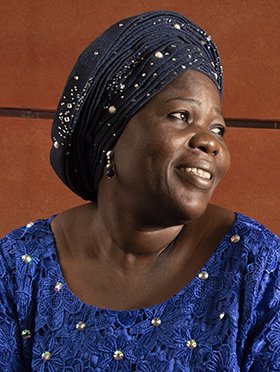
Romuald Wadagni
Since 24 May 2026 · Source: presidence.bj
| Office | Holder | Since |
|---|---|---|
| Head of government | Romuald Wadagni | 24 May 2026 |
Sources: Government of Benin (retrieved 11 Oct 2026).
National Assembly (Assemblée nationale)
Unicameral. Source: CIA World Factbook
| Chamber | Seats | Last election |
|---|---|---|
| National Assembly (Assemblée nationale) | 109 (all directly elected) | 11 Jan 2026 |
Benin National Assembly: list of deputies
Political mix
Seats by party in each chamber of Benin. One dot is one seat.
National Assembly
As elected, 2026
109
National Assembly seats
- Progressive Union Renewal60(55%)
- Republican Bloc49(45%)
Seats by party (table)
| Party | Seats | Share of seats |
|---|---|---|
| Progressive Union Renewal | 60 | 55% |
| Republican Bloc | 49 | 45% |
As elected: the seats each party won at the 2026 election. It does not follow members who changed party afterwards. 109 seats in the chamber. As of 11 January 2026. Source: Wikipedia, 2026 Beninese parliamentary election (reference source).
Seats as declared for the 11 January 2026 election. The Assembly's own register prints the same split (UPR 60, BR 49), so the chart and the member list agree.
The Assembly's register of deputies prints 109 rows for the tenth legislature, elected on 11 January 2026 and installed on 8 February 2026, so this list covers the whole chamber. Party is the code the register prints, UPR or BR. The constituency is the register's own number from 1 to 24; it prints no constituency name beside the number, so the number is shown as printed. The register leaves its department, commission, parliamentary group and sex columns empty, so those fields stay empty here. It prints no photograph either, so member pages are text only and are kept out of search results. The page says it was last updated on 10 February 2026 and the Assembly has published no later version, so any substitution made since then does not appear in this list.
Cabinet
Sources: Gouvernement du Bénin, membres du Gouvernement (retrieved 23 Oct 2026).
Other cabinet members
| Portfolio | Holder | Appointed |
|---|---|---|
| President of the Republic, Head of State and Head of Government (Président de la République, Chef de l'État, Chef du Gouvernement, Chef Suprême des Armées) | Romuald Wadagni | 24 May 2026 |
| Minister of Agriculture, Livestock and Fisheries (Ministre de l'Agriculture, de l'Elevage et de la Pêche) | Adin Yeton Bloukounon Goubalan | 24 May 2026 |
| Minister of Family and Social Action (Ministre de la Famille et de l'Action Sociale) | Véronique Tognifode | 24 May 2026 |
| Minister of Decentralisation and Local Governance (Ministre de la Décentralisation et de la Gouvernance Locale) | Janvier Yahouedeou | 24 May 2026 |
| Minister of Culture, Arts and Heritage (Ministre de la Culture, des Arts et du Patrimoine) | Yassine Latoundji | 24 May 2026 |
| Minister of Domestic Trade, in charge of the Formalisation of the Economy (Ministre du Commerce Intérieur, en charge de la formalisation de l'économie) | Shadiya Alimatou Assouman | 24 May 2026 |
| Minister of Digital Transformation and Innovation, in charge of the National AI Strategy (Ministre de la Transformation Digitale et de l'Innovation, en charge de la stratégie nationale d'intelligence artificielle) | Mahuna Akplogan | 24 May 2026 |
| Minister of Energy, Water and Mines (Ministre de l'Energie, de l'Eau et des Mines) | Edouard Dahome | 24 May 2026 |
| Minister of Living Environment and Transport, in charge of Sustainable Development (Ministre du Cadre de Vie et des Transports, chargé du Développement Durable) | Georges Ale | 24 May 2026 |
| Minister of Small and Medium Enterprises and Employment Promotion, in charge of Vocational Training (Ministre des Petites et Moyennes Entreprises et de la Promotion de l'Emploi, en charge de la Formation Professionnelle) | Awaou Baco | 24 May 2026 |
| Minister of Communication, in charge of Media (Ministre de la Communication, en charge des Médias) | Aurelie Adam Soule épouse Zoumarou | 24 May 2026 |
| Minister of Sports and Civic Engagement (Ministre des Sports et de l'Engagement Civique) | Benoît K. M. Dato | 24 May 2026 |
Sources: Presidency of Benin (retrieved 11 Oct 2026); Government of Benin (retrieved 11 Oct 2026).
List as of 11 Oct 2026.
Parliament, courts and independent offices
| Office | Holder | Since |
|---|---|---|
| Speaker of the National Assembly | Joseph Fifamin DJOGBENOU | 8 Feb 2026 |
| Chief Justice | Victor Dassi ADOSSOU | 4 Mar 2026 |
| Attorney General | Djidonou Saturnin AFATON | 16 Oct 2024 |
| Central Bank Governor (BCEAO, regional) | Jean-Claude Kassi BROU | - |
Sources: Assemblée nationale du Bénin, CV du Président (retrieved 23 Oct 2026); Secrétariat général du Gouvernement, décret n° 2026-082 (retrieved 23 Oct 2026); Secrétariat général du Gouvernement, compte rendu du Conseil des ministres du 16 octobre 2024 (retrieved 23 Oct 2026); BCEAO, organigramme (retrieved 23 Oct 2026).
Benin election dates 2026, 2027 and 2028
Next national election: Due by 2031, presidential election.
| Date | Election | Status | Turnout | Winner |
|---|---|---|---|---|
| 11 Jan 2026 | Parliamentary election | Held | - | Union Progressiste le Renouveau (UPR) |
| 12 Apr 2026 | Presidential election | Held | - | Romuald Wadagni |
| Due by 2031 | Presidential election | Due | - | - |
Sources: Commission Électorale Nationale Autonome (CENA) (retrieved 9 Oct 2026).
Economy at a glance
Full economy page- GDP
- US$25bn
- 2025
- GDP growth
- 8.1%
- 2025
- Remittances received
- US$339m
- 2023
- Foreign direct investment
- US$482m
- 2025
Need data we do not publish?
Tell us the question and the country. We design and field the study, and publish the method with the result.
Commission a study in BeninMore data for Benin
- Election calendar and results
- Economy of Benin
- Development jobs in Benin
- Constitution of Benin
- Statistics office and surveys in Benin
- Exams and universities in Benin
- Research permits and data protection in Benin
- Paid polls in Benin: join the waiting list
- Inflation and unemployment in Benin
- Debt of Benin: debt to GDP and largest creditors
- Benin and the rest of West Africa
Population of Benin
Benin had 14.8 million people in 2025, 28th largest of 53 in Africa. The IMF projects 17.1 million by 2030. African countries by population.
Population (2025)
14.8
28th largest of 53 in Africa
Population growth since 2015 (2025)
30.4 %
20th fastest-growing of 52 in Africa
Projected population 2030 (2030)
17.1
27th highest of 52 in Africa
People per sq km (2025)
131
13th most crowded of 53 in Africa
Source: International Monetary Fund, World Economic Outlook database, October 2026 (DataMapper indicators NGDPDPC, NGDPD and LP), October 2026. Last checked 24 October 2026.
View the data as a table
| Period | Benin |
|---|---|
| 2015 | 11.4 |
| 2016 | 11.7 |
| 2017 | 12.0 |
| 2018 | 12.4 |
| 2019 | 12.7 |
| 2020 | 13.1 |
| 2021 | 13.4 |
| 2022 | 13.8 |
| 2023 | 14.1 |
| 2024 | 14.5 |
| 2025 | 14.8 |
| 2026 | 15.2 (partial) |
| 2027 | 15.7 (partial) |
| 2028 | 16.1 (partial) |
| 2029 | 16.6 (partial) |
| 2030 | 17.1 (partial) |
Source: International Monetary Fund, World Economic Outlook database, October 2026 (DataMapper indicators NGDPDPC, NGDPD and LP), October 2026. Last checked 24 October 2026.
Inflation and unemployment in Benin
Prices in Benin rose 1.1% in 2025, 42nd highest of 52 in Africa. The ILO estimates unemployment at 1.6% (2025) and 2.9% among people aged 15 to 24. Benin's own survey put it at 1.7% in 2022. Inflation in Africa · Unemployment in Africa · Benin's economy.
Inflation (2025)
1.1 %
11th lowest of 52 in Africa
Unemployment (2025)
1.6 %
5th lowest of 53 in Africa
Youth unemployment (2025)
2.9 %
7th lowest of 53 in Africa
Unemployment, national survey (2022)
1.7 %
National survey
Source: World Bank, World Development Indicators. Last checked 24 October 2026.
View the data as a table
| Period | Benin |
|---|---|
| 2010 | 2.2 |
| 2011 | 2.7 |
| 2012 | 6.7 |
| 2013 | 0.4 |
| 2014 | -0.5 |
| 2015 | 0.2 |
| 2016 | -0.8 |
| 2017 | 0.0 |
| 2018 | 0.9 |
| 2019 | 0.7 |
| 2020 | 3.0 |
| 2021 | 1.7 |
| 2022 | 1.4 |
| 2023 | 2.7 |
| 2024 | 1.2 |
| 2025 | 1.1 |
| 2026 | Not published |
Source: World Bank, World Development Indicators. Last checked 24 October 2026.
View the data as a table
| Period | ILO modelled estimate | National survey |
|---|---|---|
| 2010 | 1.0 | 1.0 |
| 2011 | 2.7 | 2.6 |
| 2012 | 2.5 | Not published |
| 2013 | 2.2 | 2.2 |
| 2014 | 2.0 | Not published |
| 2015 | 1.9 | Not published |
| 2016 | 1.8 | Not published |
| 2017 | 1.7 | Not published |
| 2018 | 1.4 | Not published |
| 2019 | 1.2 | 1.2 |
| 2020 | 1.5 | Not published |
| 2021 | 1.8 | Not published |
| 2022 | 1.7 | 1.7 |
| 2023 | 1.6 | Not published |
| 2024 | 1.6 | Not published |
| 2025 | 1.6 | Not published |
| 2026 | Not published | Not published |
Source: World Bank, World Development Indicators. Last checked 24 October 2026.
Life expectancy and infant mortality in Benin
A child born in Benin can expect to live 61 years (2024). 75 of every 1,000 children die before age five. Life expectancy in Africa, all countries ranked.
Life expectancy (2024)
61.0
46th longest of 54 in Africa
Child deaths under five (2024)
75
44th lowest of 54 in Africa
Health spending per person (2023)
47
39th highest of 54 in Africa
Source: World Bank, World Development Indicators. Last checked 24 October 2026.
View the data as a table
| Period | Benin | Middle African country |
|---|---|---|
| 2014 | 59.0 | 61.8 |
| 2015 | 59.1 | 62.3 |
| 2016 | 59.3 | 62.8 |
| 2017 | 59.5 | 63.1 |
| 2018 | 59.7 | 63.2 |
| 2019 | 59.9 | 63.3 |
| 2020 | 60.2 | 63.7 |
| 2021 | 59.6 | 62.5 |
| 2022 | 60.5 | 64.6 |
| 2023 | 60.8 | 65.6 |
| 2024 | 61.0 | 65.8 |
Source: World Bank, World Development Indicators. Last checked 24 October 2026.
View the data as a table
| Period | Benin |
|---|---|
| 2014 | 98 |
| 2015 | 96 |
| 2016 | 94 |
| 2017 | 92 |
| 2018 | 89 |
| 2019 | 87 |
| 2020 | 85 |
| 2021 | 82 |
| 2022 | 80 |
| 2023 | 77 |
| 2024 | 75 |
Source: World Bank, World Development Indicators. Last checked 24 October 2026.
Literacy rate in Benin
51.4% of adults in Benin can read and write (2022, World Bank). Literacy rate in Africa by country · Universities and exam bodies in Benin.
Adult literacy (2022)
51.4 %
42nd highest of 52 in Africa
Youth literacy (2022)
71.3 %
40th highest of 53 in Africa
Education spending, % of GDP (2023)
3.2 %
28th highest of 52 in Africa
Source: World Bank, World Development Indicators. Last checked 24 October 2026.
Human development and internet access in Benin
Benin's Human Development Index was 0.515 in 2023, 173rd of 193 countries in the world (low human development). Human Development Index in Africa · Tech and internet in Africa · Learn digital skills with SR Academy.
Human Development Index (2023)
0.52
33rd highest of 54 in Africa
Internet users (2024)
34.0 %
31st highest of 54 in Africa
Mobile subscriptions (2024)
126
10th highest of 54 in Africa
Access to electricity (2024)
59.0 %
30th highest of 54 in Africa
Source: World Bank, World Development Indicators. Last checked 24 October 2026.
View the data as a table
| Period | Benin | Middle African country |
|---|---|---|
| 2000 | 0.42 | 0.44 |
| 2001 | 0.43 | 0.45 |
| 2002 | 0.44 | 0.45 |
| 2003 | 0.44 | 0.46 |
| 2004 | 0.45 | 0.46 |
| 2005 | 0.46 | 0.47 |
| 2006 | 0.46 | 0.47 |
| 2007 | 0.47 | 0.48 |
| 2008 | 0.48 | 0.49 |
| 2009 | 0.48 | 0.50 |
| 2010 | 0.49 | 0.50 |
| 2011 | 0.49 | 0.51 |
| 2012 | 0.50 | 0.52 |
| 2013 | 0.51 | 0.52 |
| 2014 | 0.51 | 0.52 |
| 2015 | 0.51 | 0.53 |
| 2016 | 0.51 | 0.53 |
| 2017 | 0.51 | 0.54 |
| 2018 | 0.51 | 0.54 |
| 2019 | 0.51 | 0.55 |
| 2020 | 0.50 | 0.55 |
| 2021 | 0.51 | 0.56 |
| 2022 | 0.51 | 0.57 |
| 2023 | 0.52 | 0.57 |
Source: UNDP, Human Development Report, composite indices time series. Last checked 24 October 2026.
Is Benin safe?
The US State Department rates Benin at level 2 of 4: exercise increased caution. The homicide rate is 1.1 per 100,000 people (2017). Safest countries in Africa.
US travel advisory level (2026)
2
34th safest by advisory of 54 in Africa
Homicide rate (2017)
1.1
4th lowest of 37 in Africa
Conflict deaths (2024)
77
14th highest of 30 in Africa
Source: World Bank, World Development Indicators. Last checked 24 October 2026.
Coups, democracy and stability in Benin
Benin has had 6 successful coups, the latest on 26 October 1972, and 7 failed attempts or plots. Coups in Africa: every country.
- 7 December 2025: Failed coup attempt
- 24 September 2024: Coup plot
- 16 January 1977: Failed coup attempt
- 19 October 1975: Coup plot
- 21 January 1975: Failed coup attempt
- 26 October 1972: Coup (succeeded)
- 23 February 1972: Failed coup attempt
- 10 December 1969: Coup (succeeded)
Voice and accountability (2025)
51
16th highest of 54 in Africa
Political stability (2025)
59
18th highest of 54 in Africa
Control of corruption (2025)
44
11th highest of 54 in Africa
Source: World Bank, Worldwide Governance Indicators. Last checked 24 October 2026.
Benin's debt
Government debt was 59.3% of GDP in 2025 (IMF). The largest foreign creditor is World Bank-IDA, owed 26% of public debt abroad (2024). Benin's debt and creditors in full · Debt in Africa.
Where Benin ranks in Africa
Its place among the 54 African countries on each of our Africa rankings. Each tile opens the full ranking with its source.
- GDP per person28th of 53$1,661, 2025Richest countries in Africa
- Size of the economy24th of 53$24.6 billion, 2025Largest economies in Africa
- Population28th of 5314.8 million, 2025African countries by population
- Area38th of 54114,760 sq kmLargest countries in Africa
- Life expectancy46th of 5461.0 years, 2024Life expectancy in Africa
- US travel advisory5th of 54Level 2, increased cautionSafest countries in Africa
- President's time in office51st longest of 51Romuald Wadagni, 0 yearsLongest serving presidents
- President's age7th youngest of 5150 years oldYoungest presidents in Africa
Cite this
PollsAfrica (2026). Government of Benin. Retrieved 26 Oct 2026 from https://pollsafrica.com/countries/benin